LOSING MY EYE AND GAINING A FAKE ONE: Art Meets Science in the Making of a Prosthetic Eye (plus FAQ)

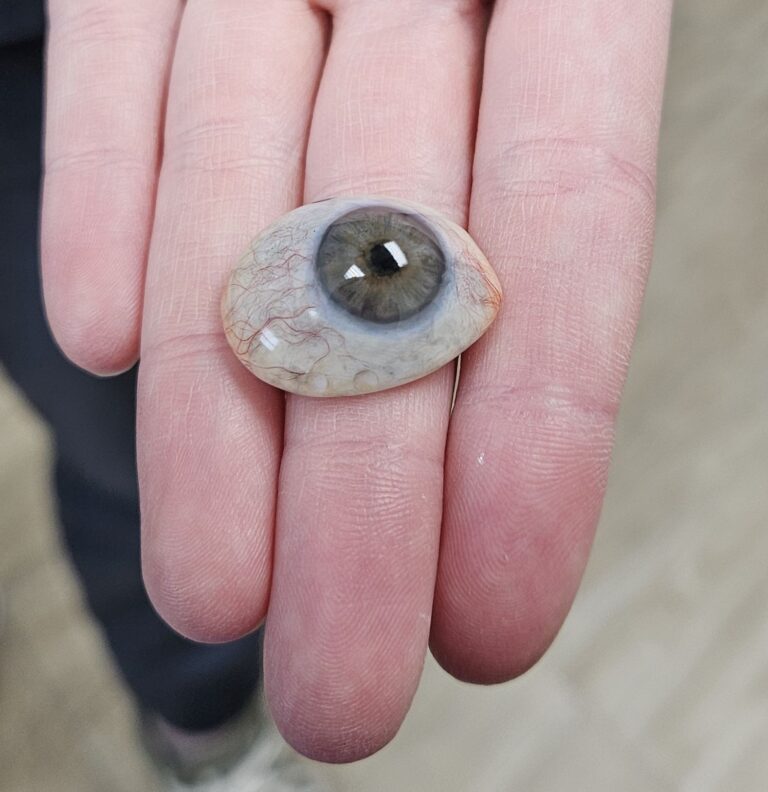
Which is the real eye?
I’d never heard of ocular/uveal melanoma before I was told I had it. Odds: six in a million. My vision in my right eye had become blurry. I thought it was my cataract progressing. Surprise.
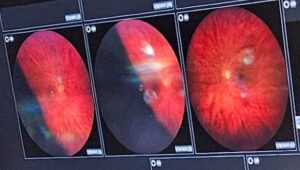
Had my ophthalmologist been using early detection retinal imaging, it would have been caught sooner, the tumor small enough to radiate, and my eye would not have been enucleated (removed). Thankfully, the melanoma has not spread. Yet.
If you take away anything from this post it’s PAY FOR THE PHOTOS. Eye care providers charge a little extra (typically under $100) for an OPTUS, OCT, Fundus, or DRI. They emit bright bursts of light to take photos of the inside of your eye. A lot can be seen with retinal imaging that goes beyond the eyes, like certain diabetes, cancers, autoimmune diseases, and vascular and neurological issues. They’re even close to diagnosing Alzheimer’s with it. Why they’re not standard practice is baffling. They’re like mammograms for the eyes without radiation. Dilation isn’t needed but is always preferable.
My opthalmologist was not doing routine retinal imaging, my tumor mutated into a more aggressive one, and I have a 50/50 chance it will metastisize. There is no cure. I will be having MRIs every three months for years. The fear it will return will never go away.
Get an annual exam, dilate, and pay for the photos. I did # 1 and 2 and it was still missed. I did not know about asking for #3.
THE OPERATION
The morning of my surgery, I felt sad I was about to lose a part of my body I’d had for almost 70 years. That melancholy was quickly dismissed with the joy of having the tumor out of me.
I was knocked out completely and my real eye removed by the wonderful Dr. Maniar at the Duke Eye Center. A permanent white acrylic ball was placed in the socket to keep the tissue around it from collapsing. My eye muscles were reattached to the acrylic ball so that my eventual fake eye, when placed over the ball, would still move with my other eye, somewhat. I waited two months for the swelling to go down before Round One of my fitting.
My right eye socket looked pretty frightening during this time. I bought eye patches in a variety of colors on Etsy that slid over my eyeglasses. One was customized with a shot of the world’s top sumo wrestlers. I’m nuts about sumo and tapped into their incredible strength as I recovered from this unexpected medical drama.
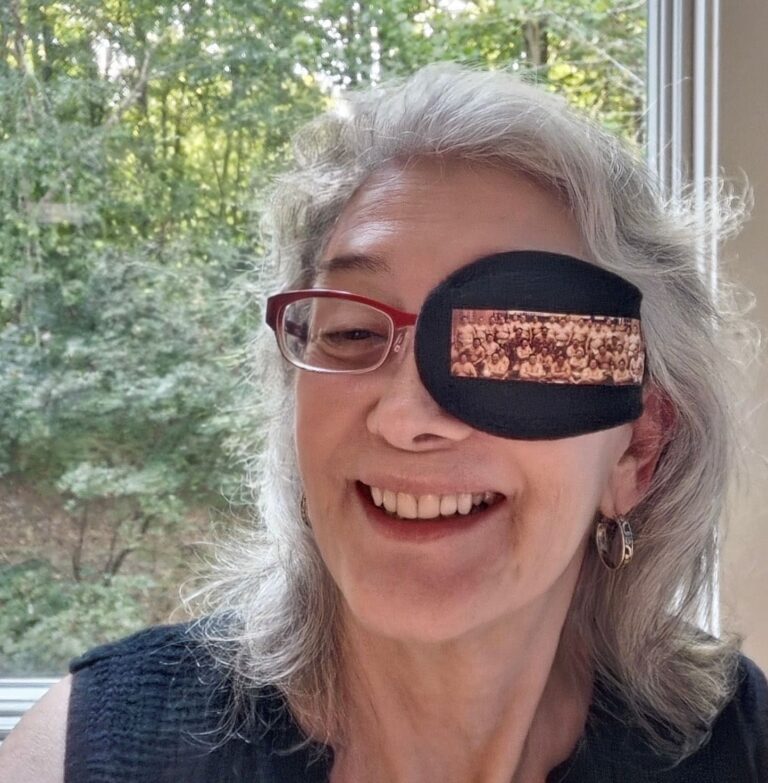
Sumo eyepatch by PatchPals
THE MAGIC BEGINS
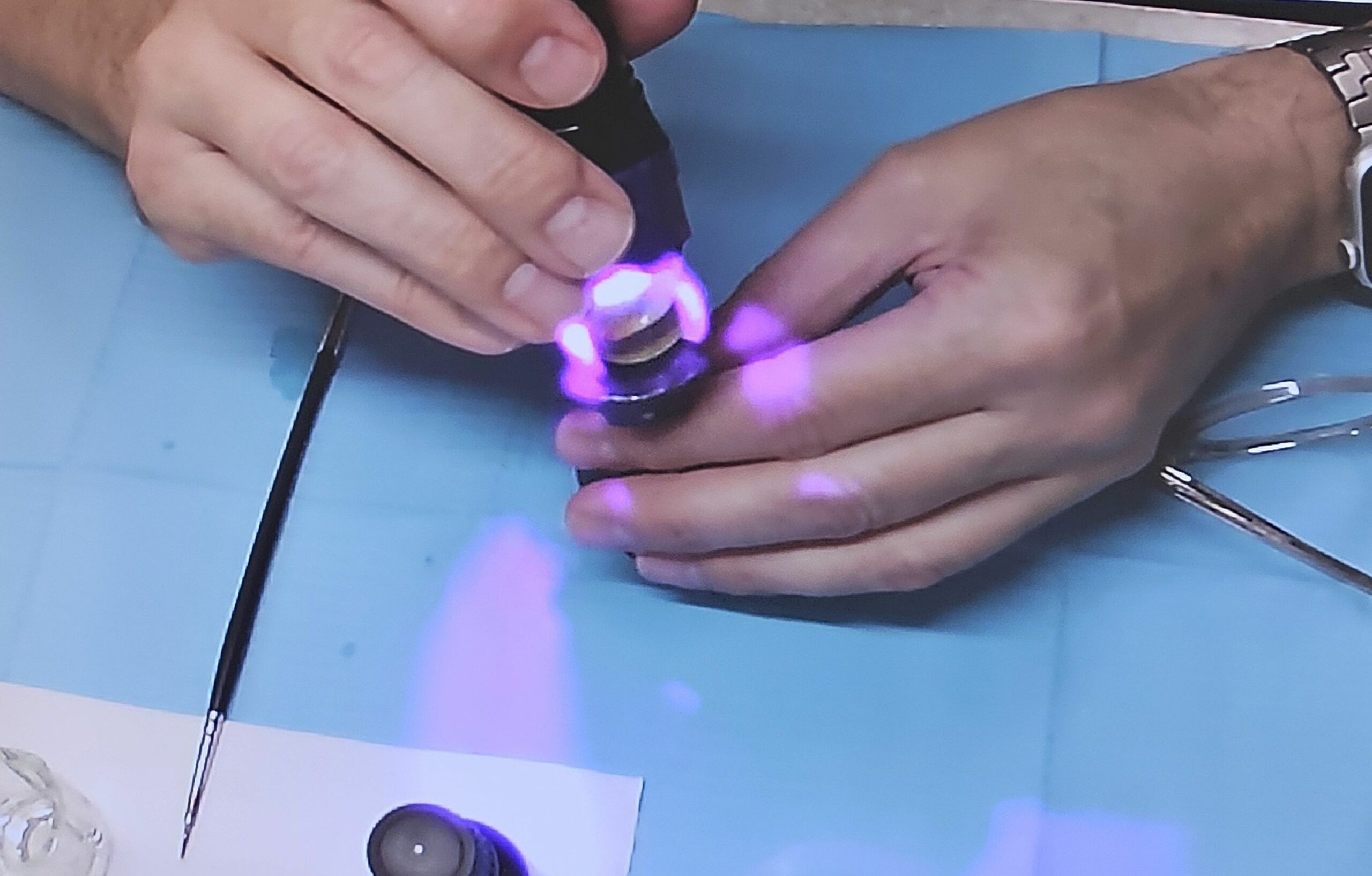
It took about 2.5 hours to create the mold for the acrylic prosthetic, then tweak it, choose the best iris from over 700, and a pupil size. Photos were taken of my real eye. I returned a week later for another 2.5 hours. In between visits the iris was painted and white area around the eye modified to look like mine.
Thank you, Jay McClennen (who made prosthetics for the movie business and can make any body part), his assistant Cas O’Neal, and the entire team at the Anaplastology Clinic in Durham, NC.
Enjoy the show. FAQ after the photos.
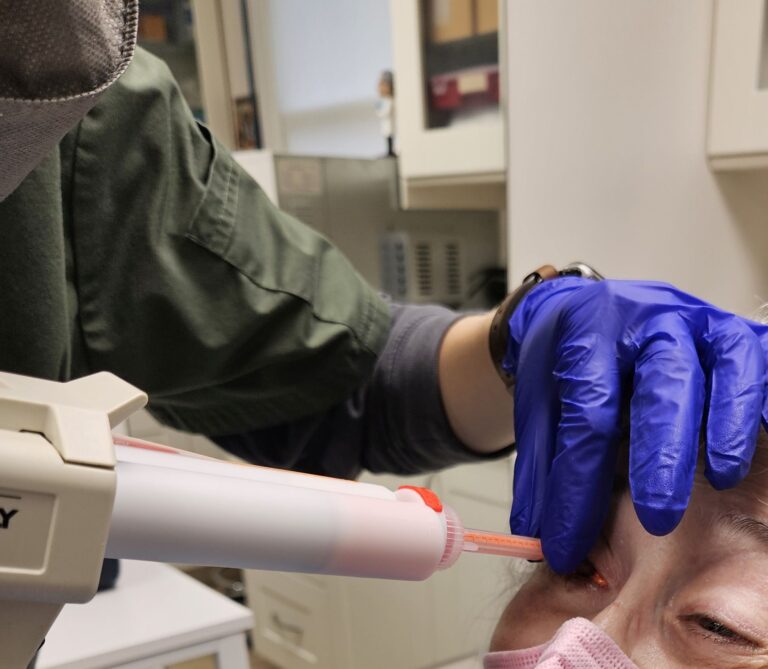
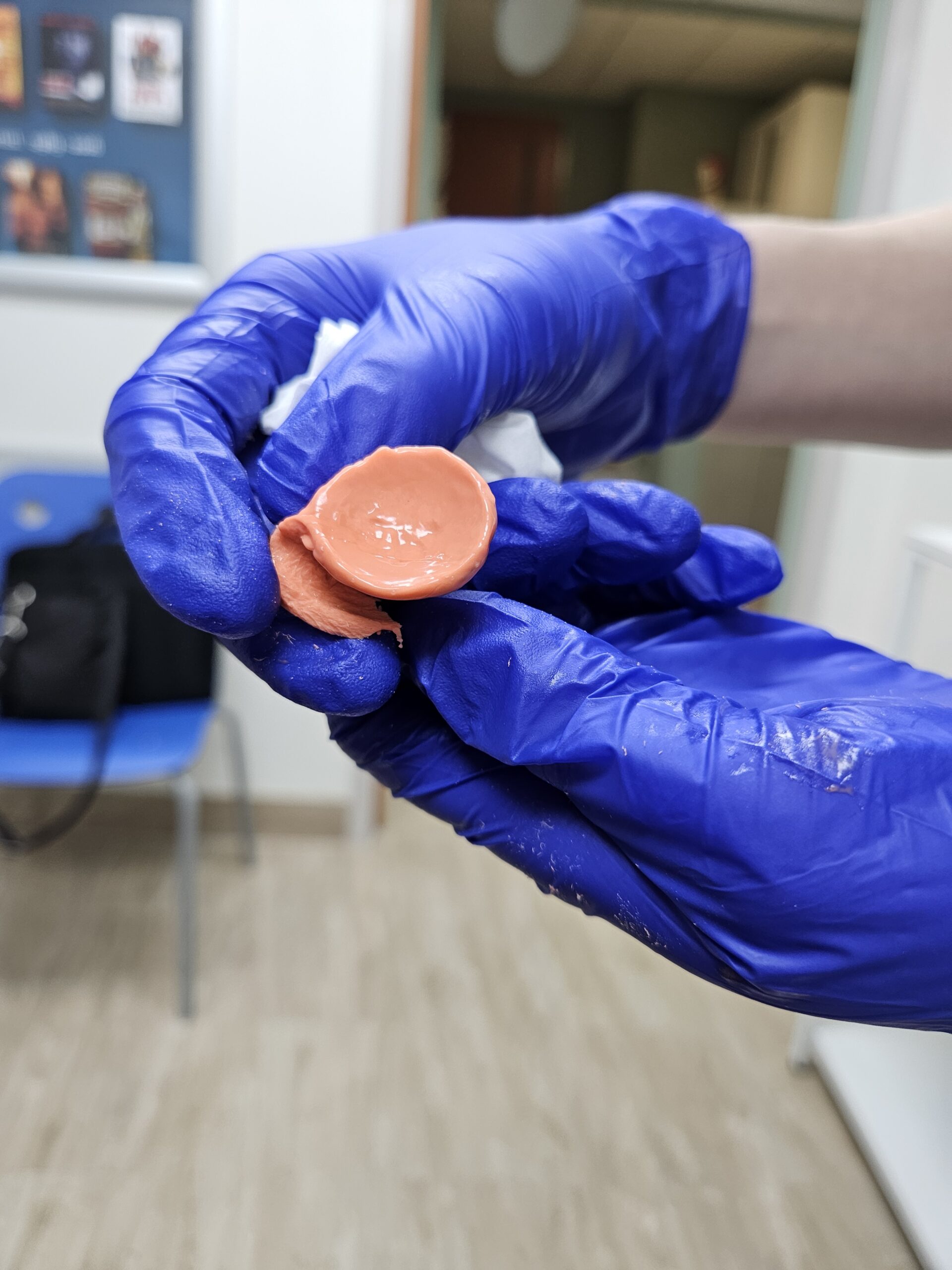
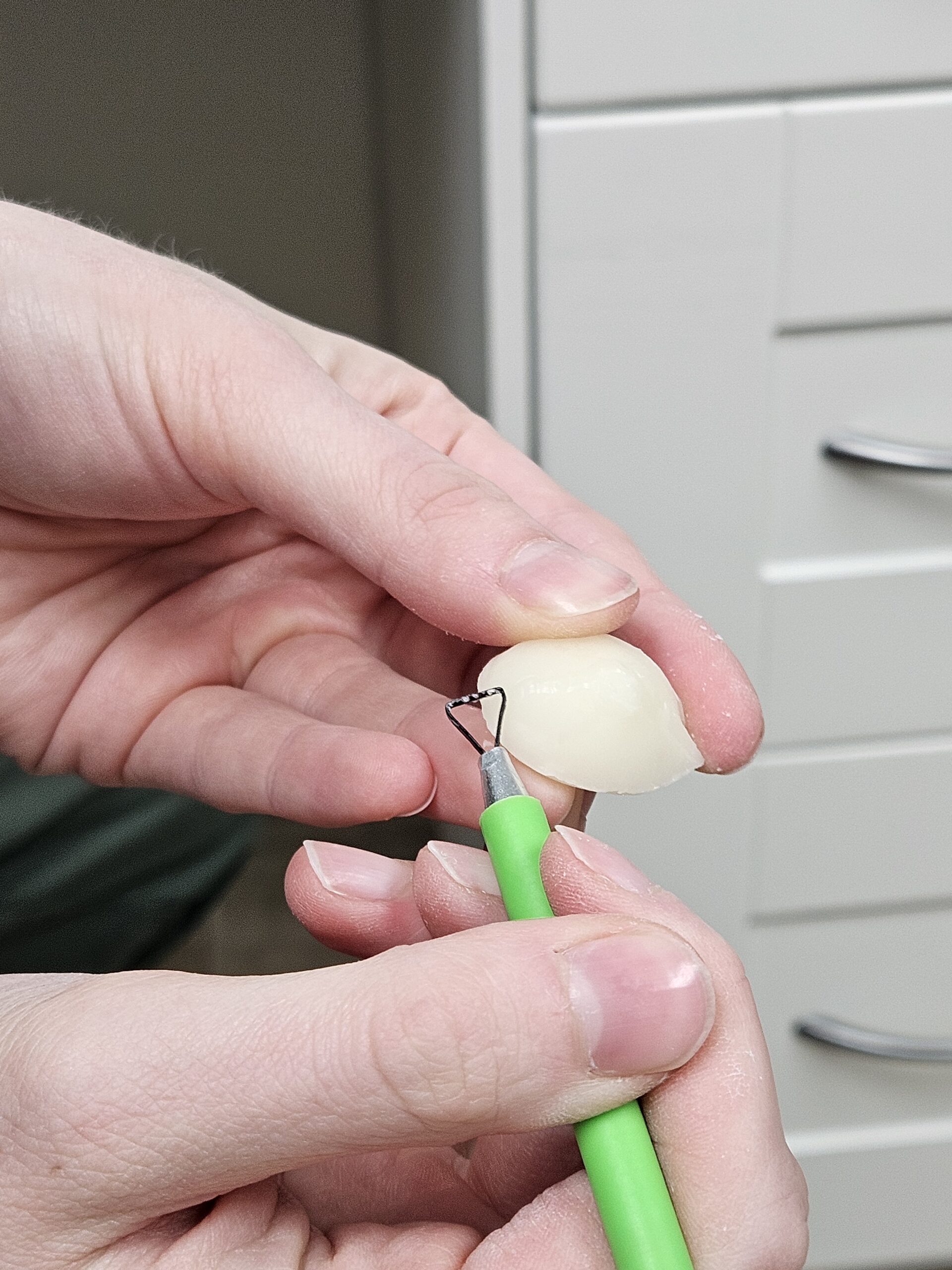
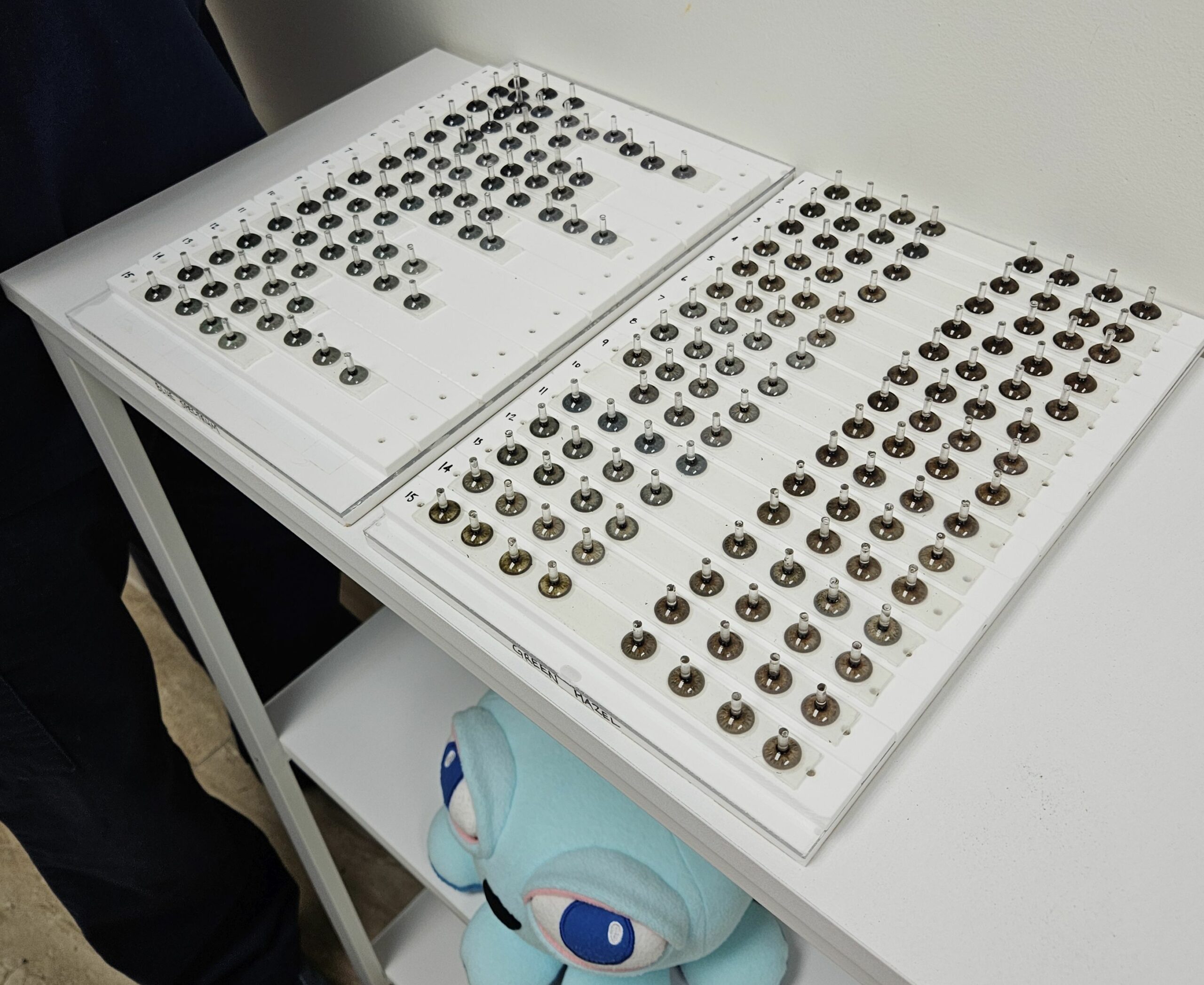
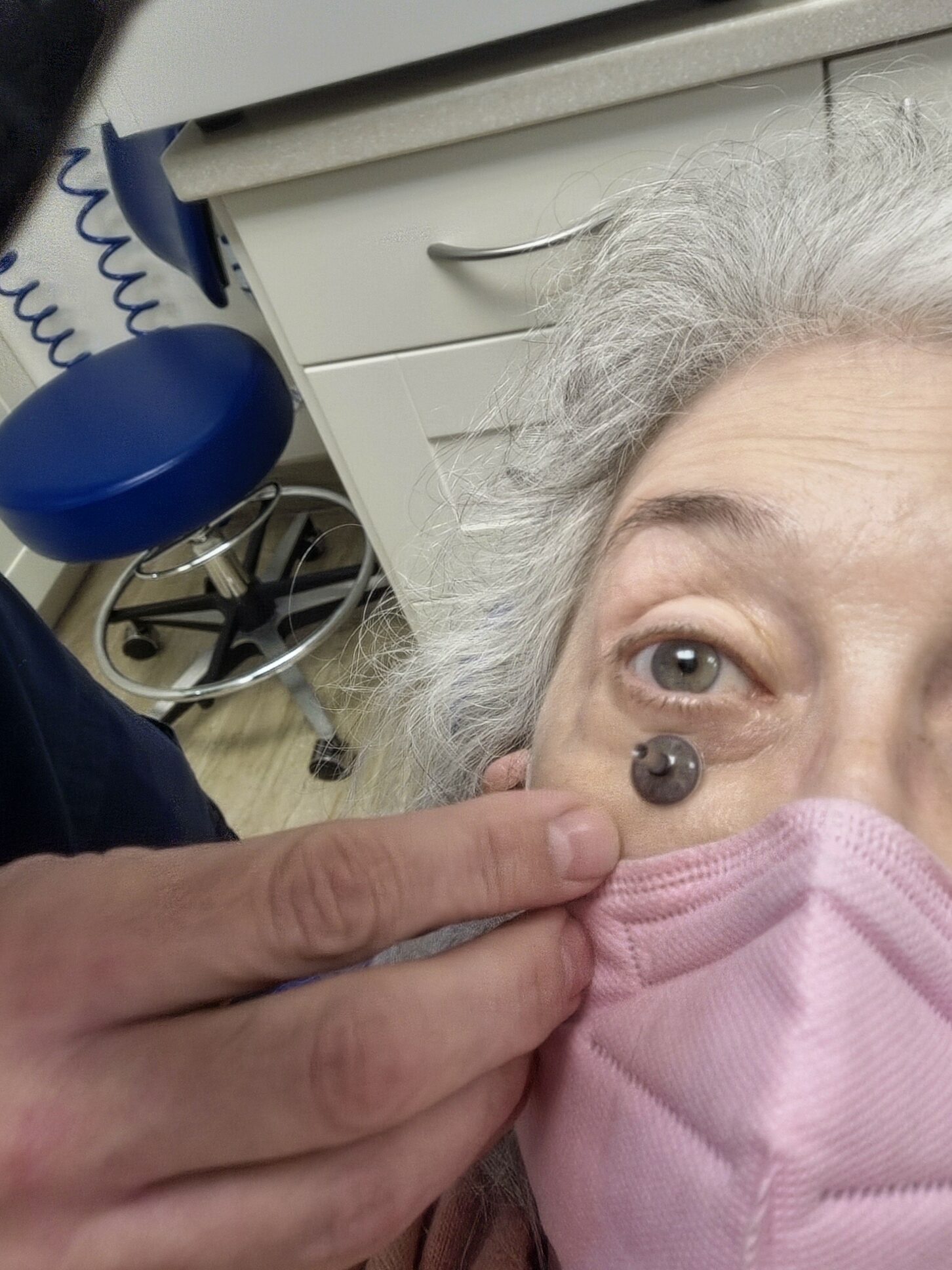
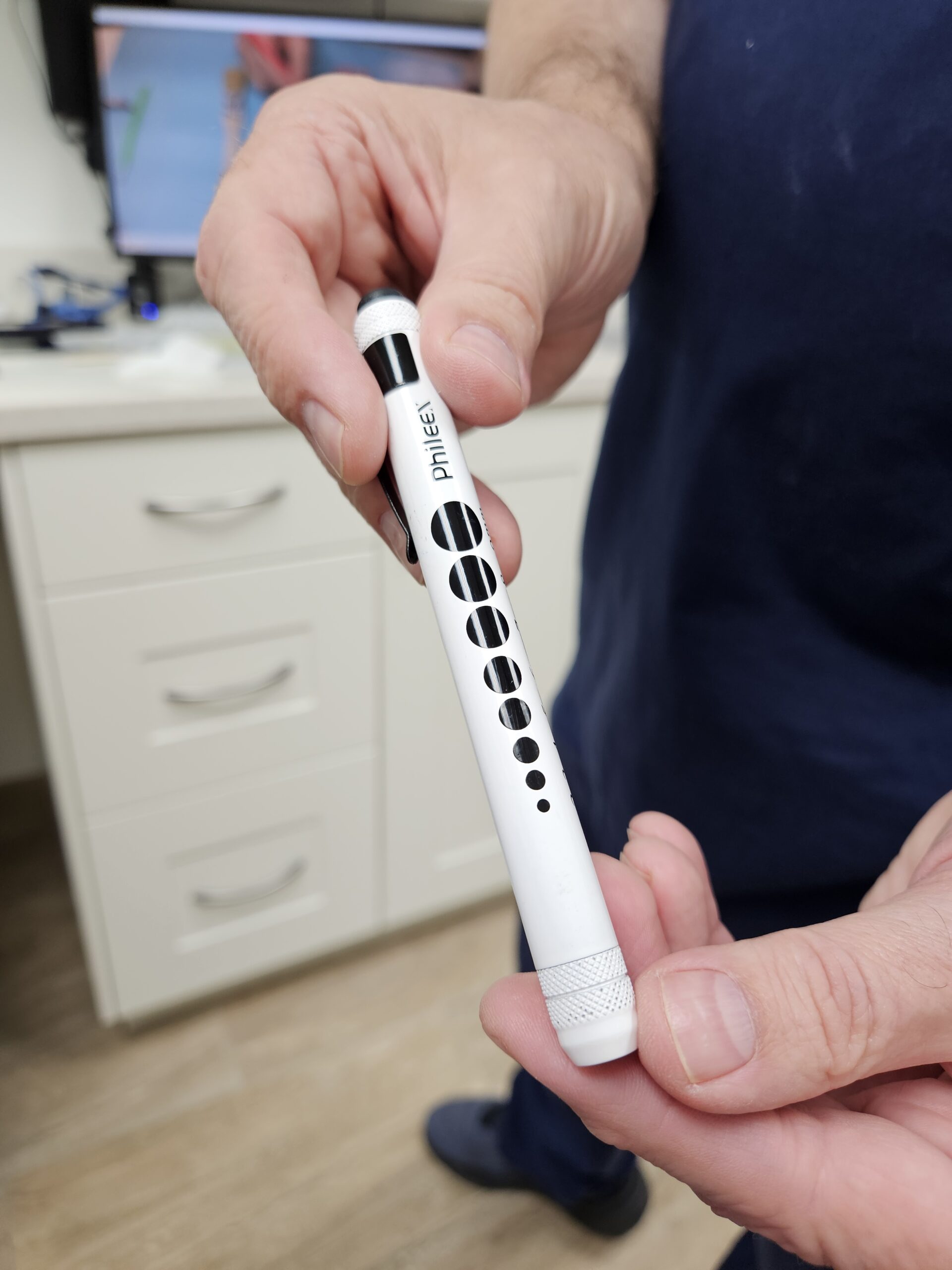
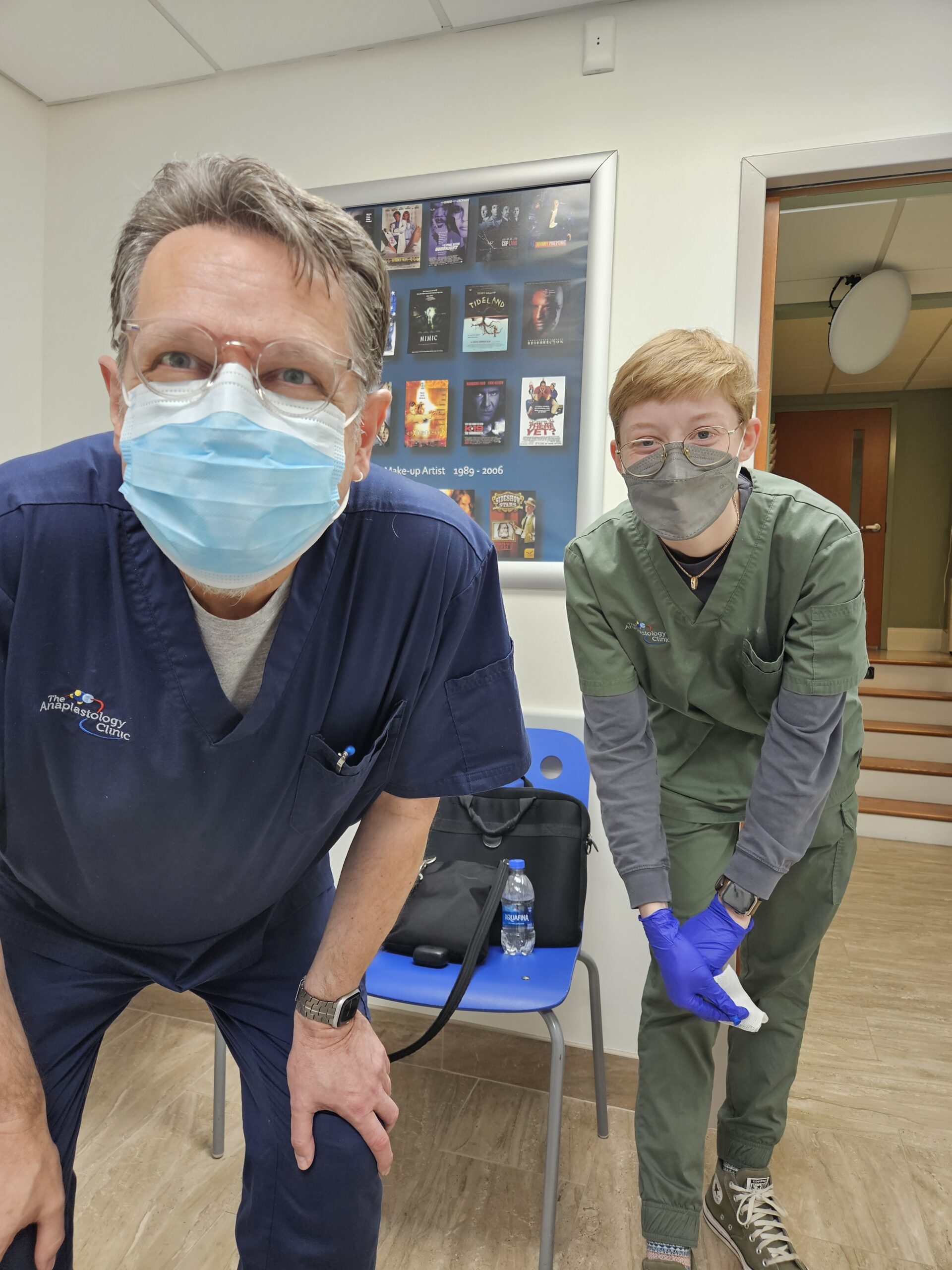
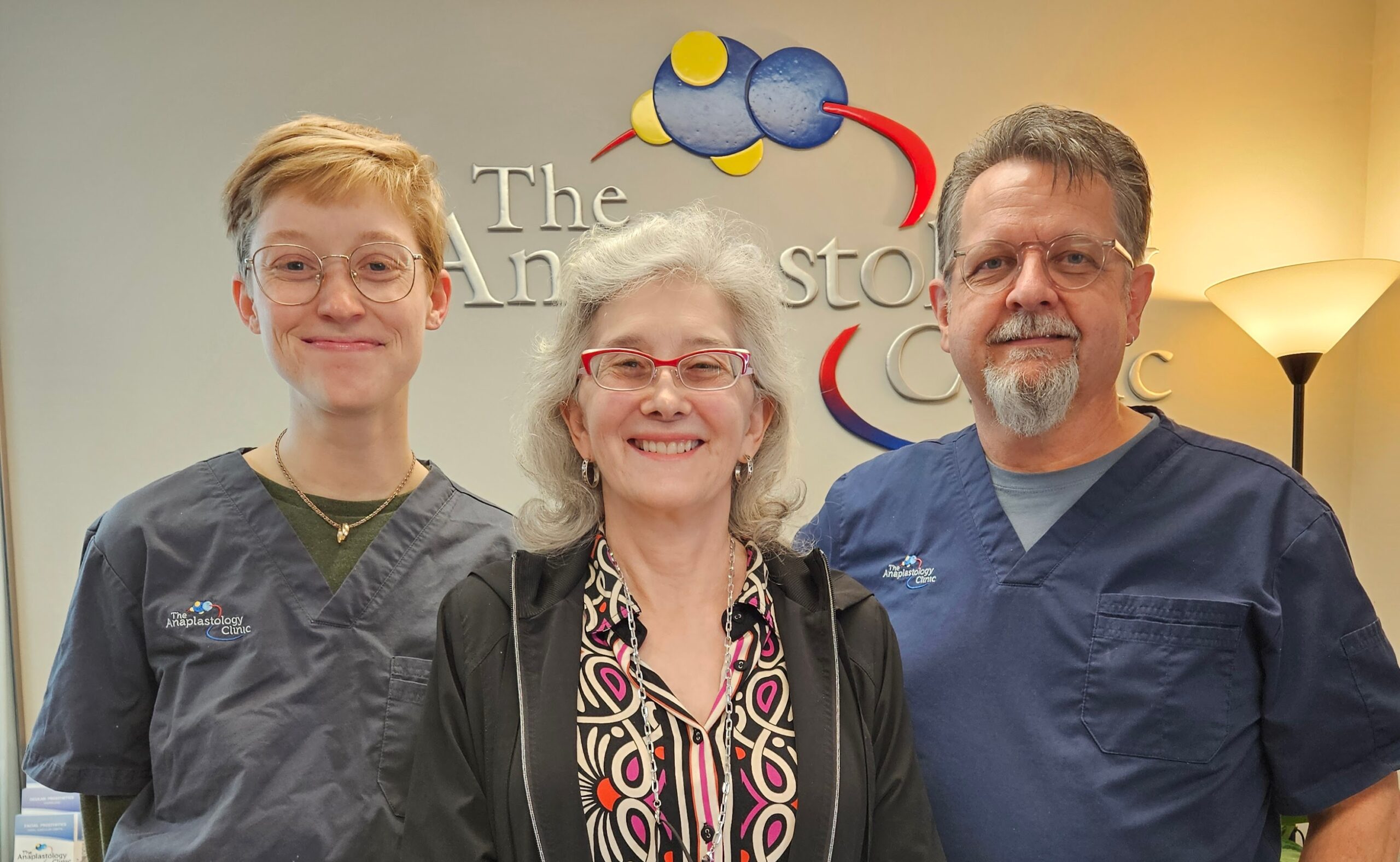
Cas O’Neal, Jay McClennen, Anaplastology Clinic, Durham, NC
FAQ
Do you take it out at night before you go to bed?
No. It stays in all the time. I take it out on the first of each month for a bath (a drop of baby shampoo and a soft cloth).
Does it hurt?
No. I don’t feel it at all. I didn’t feel the cancer either. [UPDATE: I have struggled with Giant Papillae. If you Google it, you’ll see what’s under the upper eyelid. It’s not visible when looking at my outer eye. It creates a lot of discharge and itching that’s quite annoying. Sometimes the prosthesis spins around in the socket and I don’t realize it until I look in a mirror and see my eye pointing the wrong direction! We’re in the midst of getting this under control with steroid drops. Stay tuned.]
What is it made of?
It’s not a glass eye. It’s acrylic. The base is a white acrylic, the paint is a UV-cured acrylic, then clear acrylic goes on top. If I drop it, it won’t shatter, but it could crackle like old china.
What did it cost?
The price of a hand-painted prosthetic eye averages around $5,000 depending on where you live and other factors. Insurance coverage varies. It turned out I had the best Medicare supplement you can have for a prosthetic eye. I paid nothing. AARP’s Original Medicare Plan G picked up over $4000 that Medicare would not cover. Medicare only paid around $800.
If you don’t have good insurance coverage, there’s crowdfunding platforms and CareCredit, the healthcare credit card with 0% interest for 6-24 months. The ocularist should give you a cost estimate before you show up. If they don’t offer a free initial consultation to answer your questions, keep looking.
What is your vision like now?
Try going through your day with one eye closed. Keep it that way. Forever. That’s how I see. I can still drive, but I won’t do it at night.
How are you handling this?
It may sound odd, but I haven’t cried over this. Thinking about what my husband may face if this metastasizes, or I lose sight in my good eye is very upsetting, of course. It’s not that I’m a tough cookie. I’m not. It’s just easier to deal with things I have no control over. I’ve felt other strong emotions, for sure, like anger and shock. I count my blessings when those take over my brain. For one, I’m glad this happened when I was older, though one veteran professional I saw said younger people handle losing an eye better. My overall feeling is “unfazed.” I’ve been through so much at this point.
Perhaps this is the honeymoon period and I’ll be crying non-stop if the melanoma returns somewhere else in my body. Metastasized uveal melanoma is treated differently than skin melanoma. The only option as of today is immunotherapy if you have a certain gene and infusions every week for the rest of your life. And that’s if you respond well and only have mild side effects. I’ve heard a positive attitude is key, however my melanoma oncologist at Duke disagrees. “You’re either lucky or you’re not,” she said. “There is nothing you can do to keep it from spreading. It either will or it won’t.”
There will be a lot of CT scans and MRIs in my future. For now, I feel terrific and extremely lucky. The mystery of how long I’ll be here has added new fear but also new joy to my life. You never know where you’ll find it.
More about retinal imaging:
American Academy of Ophthalmology
If you’ve been diagnosed with uveal (ocular) melanoma: The non-profit A Cure In Sight was founded by someone who once had OM and is super-serving this community on many levels. If you know someone who has it and want to show your support, their site is a good place to start.
I hope you find future peace in Jesus Christ the great physician. Continue to be blessed and be in good health even as you’re soul prosperous thank you for your detailed wonderful story of trials and triumphs. For some reason, God told me to look up your profile today and pray for you.
Prayers are always appreciated. Thank you.